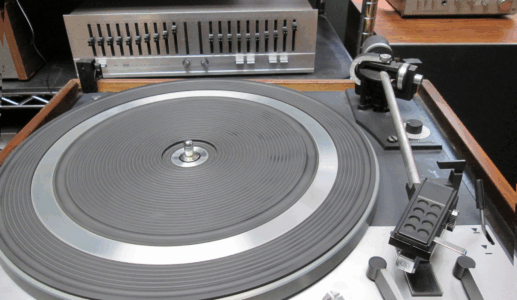
A bit of a disclaimer before we go in- This is not a “how to” post. It is merely a story about what I did when I refurbished this old turntable. If you decide you want to try doing the same, be sure you have the knowledge, tools, and service manuals. I am not a technician, so I make mistakes, a lot of mistakes, be sure you don’t do the same.
That being said, let me tell you that sometimes it is nearly impossible to pass up a nice piece of vintage equipment. In this case the opportunity to acquire this Dual 1228 turntable came up, so I jumped at the chance. This turntable features pitch control, strobe, and a couple of other goodies that make it an especially appealing machine.
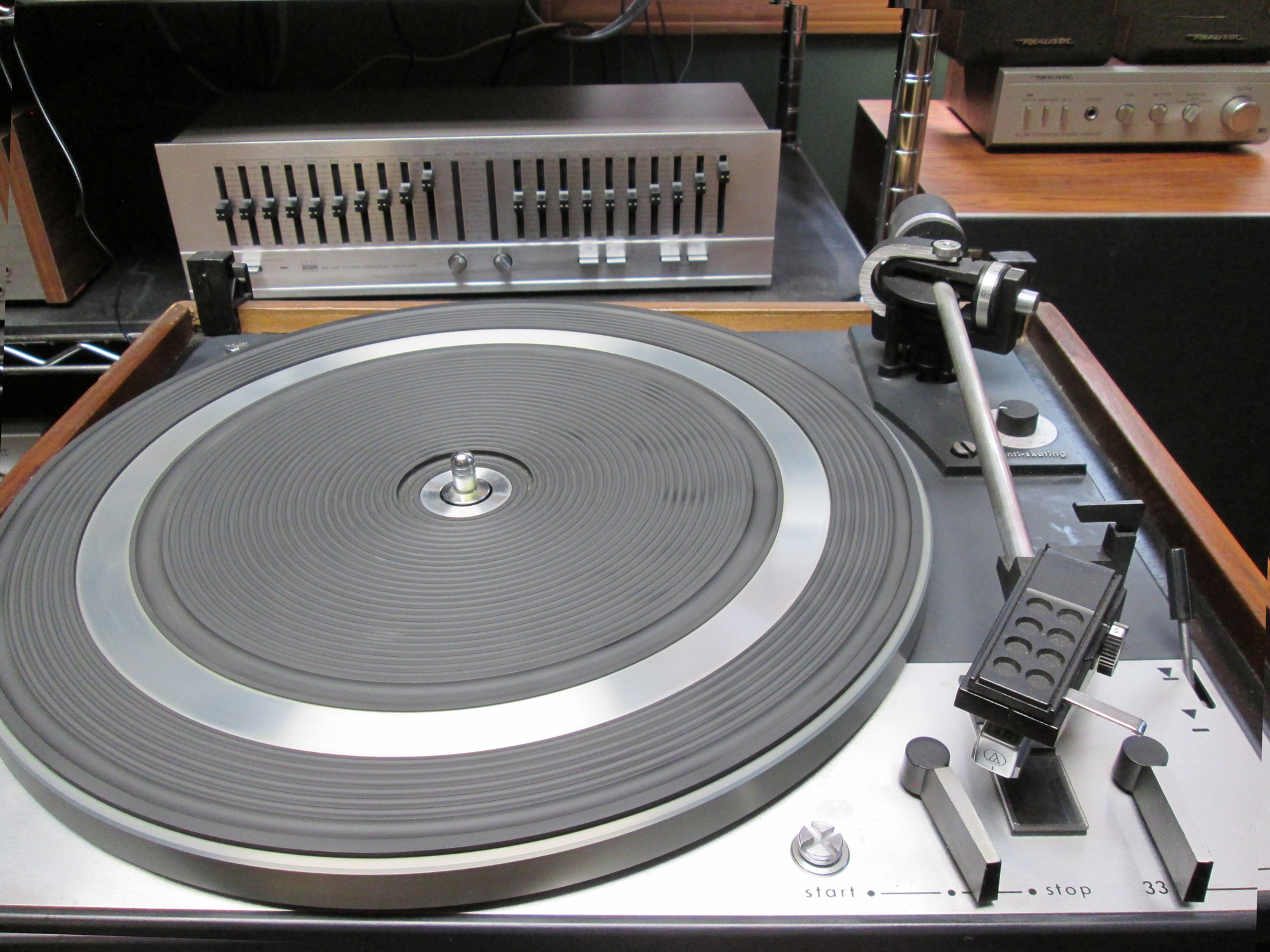
Sure enough, the turntable did not want to turn. I grunted and groaned and protested to the max degree. Rather than taking a chance at burning up the motor, I shut it down very quickly.
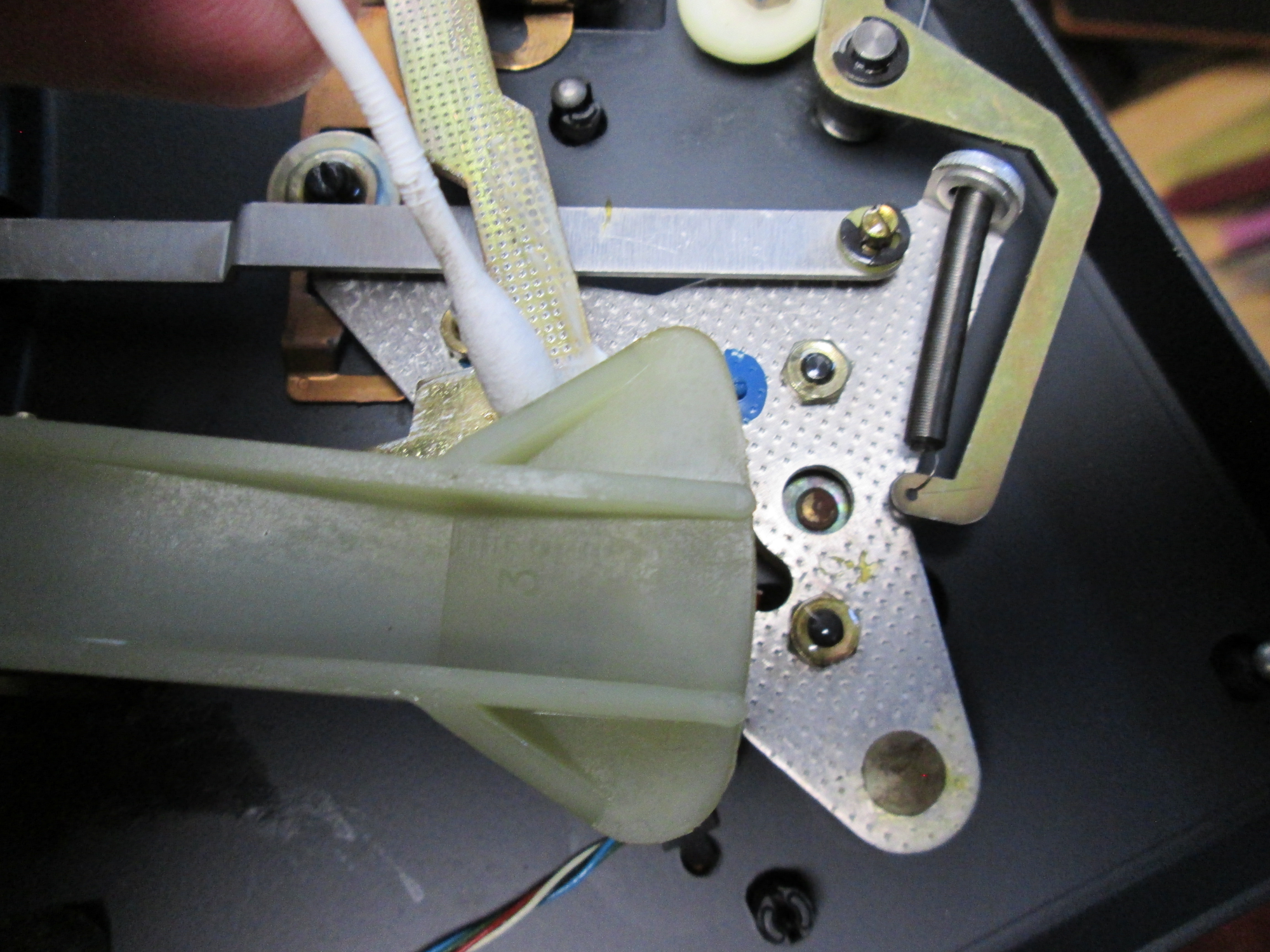
After performing a quick exterior cleaning I removed the turntable assemble from the wood base. No doubt about it, the ancient factory applied grease had hardened up. In the photo on the right you can see the cleaning that I did using a Q-tip and some light oil as a solvent. The old grease was stubborn, so the part of the project took some time.
Once all the old goo had been removed, I lubricated certain parts of the mechanics with high-quality oil. I also applied white lithium grease to the gear-like part that you see in the middle of the photo.
That was a mistake.
That gear-like part has a convoluted groove, or channel, that a pin on the the white-ish arm follows when the gear turns. That arm is part of the system that moves the tone arm to and from the resting place and the record. When tested the turntable there was a rather annoying plastic-on-plastic sound at certain times when the tonearm moved. That sound occurred with the pin on the arm passed through a certain place in the channel.
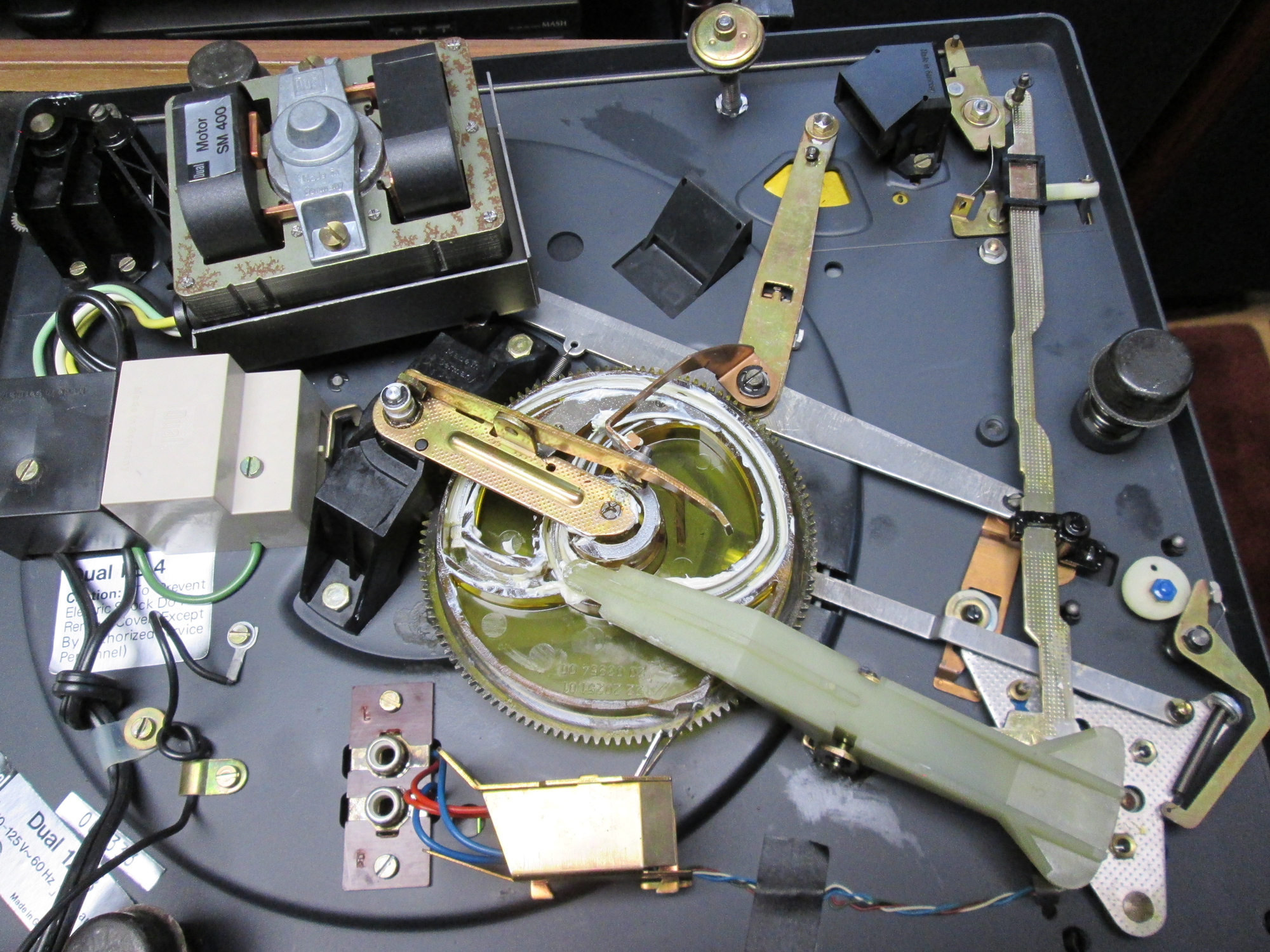
The problem was caused by my use of the lithium grease. It turns out that white lithium grease is not appropriate for this application. It does not provide the necessary “slip” properties, I guess you might say. Numerous turntable repairers used silicone grease instead with excellent results. I purchased a tube of the lubricant that seemed to be the most popular.
Removal of the white lithium grease was annoying, but not particularly difficult. I had it out of the channel in a half hour or so. Then I applied the silicone grease and tested the the turntable again. There was a pair of tiny groans when the pin first started to move in the channel, then the new grease was spread out properly and the mechanism became totally silent.
I have tested the turntable extensively since the repair and it has functioned perfectly. As you might expect, I balanced the tonearm, aligned and set the cartridge, and checked all the other adjustments including the stylus pressure. Once everything was within specification this Dual 1228 has performed far better than I originally expected.
Below is a video the turntable in action.